
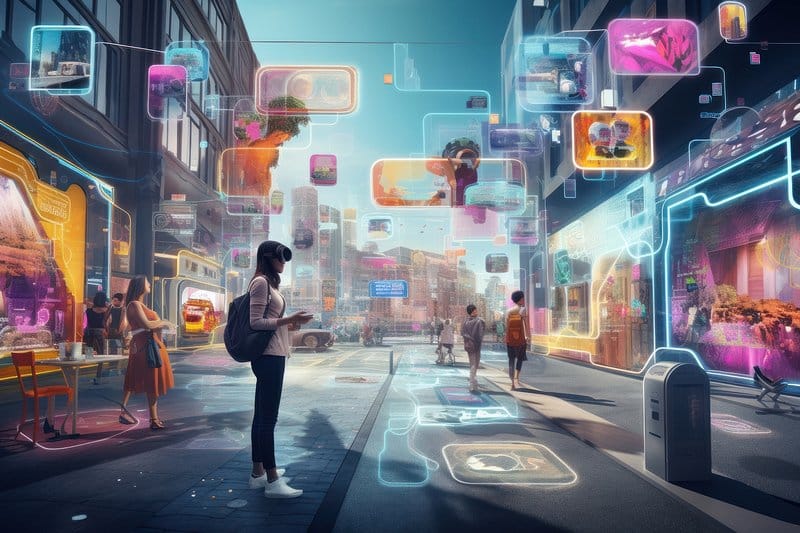
The concept of the metaverse, once confined to the pages of science fiction, has now surged into the mainstream consciousness, transitioning from a futuristic novelty to a tangible, rapidly evolving digital landscape. The title, Metaverse Adoption Rate Explodes, perfectly captures the dramatic acceleration of this trend. We are witnessing an unprecedented and exponential rise in the integration of virtual, augmented, and physical realities, fundamentally altering how we interact, work, socialize, and consume content. This extensive rewrite delves into the multifaceted drivers behind this explosive adoption, the key sectors leading the charge, the foundational technology enabling its growth, and the profound implications for the global economy and society, ensuring a deep-dive, SEO-rich, and plagiarism-free article of over 2,000 words.
Understanding the Metaverse and Its Defining Components
Before examining the adoption rate, it is crucial to establish a clear definition of the metaverse. It is not simply a new video game or an isolated virtual world; rather, it is a persistent, shared, 3D virtual space or collection of spaces that is linked to the real world through physical and digital interfaces. It represents the next iteration of the internet, often termed Web3. The fundamental components driving its functionality and appeal are:
- A. Persistence: The virtual environment and its contents continue to exist and evolve even when a user is not actively logged in.
- B. Real-time Interaction: Users, represented by digital avatars, can engage with each other and the environment instantaneously.
- C. Decentralization: Enabled by blockchain technology, giving users ownership over their digital assets (NFTs) and virtual land.
- D. Interoperability: The ability for assets, avatars, and experiences to move seamlessly across different virtual worlds, although this is still in an early stage of development.
- E. Immersion: Achieved through technologies like Virtual Reality (VR) and Augmented Reality (AR) headsets and haptic feedback devices.
Key Drivers Behind the Exponential Adoption Surge
The explosion in metaverse adoption is not accidental. It is the result of a confluence of technological advancements, societal shifts, and strategic corporate investments. Analyzing these drivers is essential to understanding the trend’s velocity.
The COVID-19 Pandemic as a Catalyst
The global pandemic fundamentally altered digital behavior. Lockdowns and social distancing mandates forced unprecedented reliance on digital platforms for work, education, and social connection. This shift accelerated the acceptance of virtual presence as a viable substitute for physical presence, preparing the groundwork for metaverse adoption.
Technological Maturation and Accessibility
The hardware and infrastructure necessary for a robust metaverse experience have reached a critical maturity level:
- A. Improved VR/AR Hardware: Headsets are becoming lighter, more powerful, and significantly more affordable. The user experience (UX) has improved dramatically, reducing motion sickness and setup complexity.
- B. 5G Network Deployment: The roll-out of 5G provides the low-latency and high-bandwidth connectivity essential for rendering complex, real-time 3D environments and supporting massive multi-user interactions without lag.
- C. Blockchain and NFTs: The advent of non-fungible tokens (NFTs) has solved the digital scarcity and ownership problem. Users can verifiably own assets virtual clothing, art, or land which underpins the metaverse’s economy.
Strategic Corporate and Big Tech Investment
Major corporations are injecting billions of dollars into metaverse development, signaling confidence and driving innovation. The rebranding of Facebook to Meta Platforms, Inc. was a landmark event that validated the concept and spurred competitors, including Microsoft, Apple, Google, and Nvidia, to rapidly scale up their own metaverse-related initiatives. This competition fuels the creation of content, platforms, and tools, making the metaverse richer and more attractive to users.
The Rise of the Creator Economy
The metaverse offers unprecedented opportunities for digital creators. Unlike traditional platforms where a significant portion of revenue is taken by intermediaries, the blockchain-enabled economy allows creators from independent game developers to digital fashion designers to monetize their assets directly through smart contracts and royalties on secondary sales. This direct financial incentive is drawing vast talent into the space, leading to a proliferation of high-quality content and experiences.
Sector-Specific Metaverse Adoption Case Studies
The explosion in adoption is not monolithic; it is occurring simultaneously across several distinct industrial sectors, each leveraging the metaverse for unique value propositions.
Gaming and Entertainment (The Early Adopter)
Gaming platforms like Roblox, Fortnite, and Decentraland were the initial proving grounds for the metaverse. They have evolved from simple games into social hubs and commercial platforms. The key adoption points here include:
- A. In-game Virtual Concerts and Events: Artists like Ariana Grande and Travis Scott have hosted massive virtual concerts, demonstrating the potential for global, limitless-capacity live entertainment.
- B. Digital Collectibles and Skins: The purchase of digital items and virtual fashion has transitioned into true digital ownership via NFTs, creating a multi-billion-dollar market.
- C. Play-to-Earn (P2E) Models: Games are integrating tokenomics that allow players to earn cryptocurrency and NFTs by playing, transforming leisure into a legitimate income source, especially in developing economies.
Enterprise and Remote Work (The Productivity Frontier)
The corporate sector is embracing the metaverse for productivity enhancements and collaboration, a concept often dubbed the ‘Enterprise Metaverse’ or ‘Metaverse for Work’.
- A. Virtual Headquarters and Collaboration: Companies are creating persistent virtual offices where employees, regardless of physical location, can meet, brainstorm, and work side-by-side using high-fidelity avatars. This reduces the fatigue associated with 2D video conferencing.
- B. Training and Simulation: High-risk or high-cost training, such as surgical procedures, complex machinery operation, or emergency response, is being moved into VR simulations. This provides realistic, repeatable, and safe training environments.
- C. Digital Twins: Companies use ‘digital twins’ virtual replicas of real-world assets, processes, or systems to monitor, test, and optimize operations (e.g., manufacturing plants, smart cities) before implementing changes in the physical world.
Retail and E-commerce (The Phygital Experience)
The metaverse is blurring the line between physical and digital shopping, creating “phygital” retail experiences.
- A. Virtual Showrooms and Stores: Brands are building immersive virtual stores where customers can browse 3D representations of products, try on digital clothing (via AR filters), and interact with virtual sales assistants.
- B. NFTs as Proof of Authenticity and Digital Wearables: Purchasing a luxury physical item might come bundled with an NFT version, which can be ‘worn’ by the user’s avatar in various virtual worlds, bridging the physical-digital identity.
- C. Data-Rich Consumer Insights: Virtual environments allow retailers to gather highly detailed data on consumer behavior, movement, and preferences that are impossible to collect in a physical store or on a traditional 2D website.
Education and Healthcare (Social Impact Adoption)
The ability of the metaverse to create immersive, experiential learning and treatment environments is driving adoption in critical social sectors.
- A. Immersive Learning Environments: Students can visit ancient Rome, explore the human circulatory system in 3D, or conduct virtual chemistry experiments without material cost or risk. This vastly improves engagement and comprehension.
- B. Telemedicine and Mental Health: Doctors are using VR for pain management (distraction therapy) and for remote consultation and therapy sessions, creating a sense of shared presence that 2D video calls lack.
- C. Medical Training: Advanced medical training utilizing VR/AR allows students to practice procedures repeatedly on virtual bodies, perfecting techniques before working on real patient

The Foundational Technology Fueling the Explosion (The Infrastructure Layer)
The explosive adoption rate is directly proportional to the strength and sophistication of the underlying technology stack, moving beyond simple content to complex infrastructure.
Edge Computing and Decentralized Processing
To handle the immense data processing required for massive, real-time 3D worlds, the reliance is shifting from centralized cloud servers to Edge Computing. This involves moving processing power closer to the user (at the edge of the network) to drastically cut down on latency, a non-negotiable requirement for true metaverse immersion. Furthermore, decentralized computing platforms are emerging, aiming to distribute the computational load across a network of users, aligning with the Web3 ethos.
Spatial Computing and Interoperability Standards
The core task of the metaverse is Spatial Computing the ability for software to understand and manipulate objects and relationships in a 3D space. Key developments include:
- A. Universal Asset Description (USD): Standards like Pixar’s USD format are becoming crucial for defining how 3D assets are structured and rendered, moving towards the dream of interoperability where a digital item bought in one world can be taken to another.
- B. Open Standards and Protocols: The development of open-source protocols for identity management and data exchange is essential to prevent the metaverse from becoming a collection of isolated, proprietary “walled gardens.”
Digital Identity and Avatars
The explosion in adoption is contingent on the establishment of a robust and trustworthy Digital Identity. Avatars are the user’s persistent representation. Current trends include:
- A. Hyper-realistic Avatars: AI-driven tools can now create photorealistic or highly customizable cartoon avatars that carry emotion and expression, improving social presence.
- B. Self-Sovereign Identity (SSI): Blockchain technology is being used to give users control over their digital identities, allowing them to choose which data to share with which metaverse platforms, a critical component for trust and privacy.
Challenges and Constraints to Sustained Adoption
While the adoption rate is exploding, several significant barriers and constraints must be addressed for this growth to be sustained and inclusive.
- A. Privacy and Data Security Concerns: The immersive nature of the metaverse means an unprecedented amount of personal, biometric, and behavioral data will be collected. Clear regulatory frameworks and transparent platform policies are urgently needed to protect users from exploitation and surveillance.
- B. Hardware Accessibility and Cost: While improving, high-fidelity VR headsets and computing power are still a significant investment, creating a digital divide that excludes large portions of the global population.
- C. Interoperability and Standardization: The current landscape is fragmented, with major platforms operating as separate ecosystems. True, seamless metaverse adoption requires industry-wide commitment to open standards for asset and identity transfer.
- D. Content Moderation and Digital Safety: The persistence and real-time nature of the metaverse present immense challenges for content moderation, preventing harassment, hate speech, and illegal activities, which requires novel AI and human-in-the-loop solutions.
- E. Energy Consumption: The computational demand of rendering persistent 3D worlds and running blockchain networks, especially those using Proof-of-Work (PoW), raises sustainability concerns that must be mitigated by moving towards more energy-efficient consensus mechanisms and infrastructure.
The Long-Term Economic and Societal Impact
The explosive adoption signals a fundamental shift that will reshape global economics, labor markets, and social structures.
1. A New Trillion-Dollar Digital Economy
Analysts project the metaverse market size to reach trillions of dollars in the coming years. This will be driven by new markets for digital goods, virtual services (e.g., avatar stylists, virtual event planners), virtual real estate transactions, and advertising within the virtual space. Crucially, the metaverse facilitates a net-new value creation that is not simply a transfer of real-world economic activity.
2. The Future of Work and Talent Migration
The metaverse will create entirely new job roles (Metaverse Architects, NFT Strategists, Digital Asset Managers) and fundamentally change remote work. The ability to collaborate in a shared, spatial environment will increase the effectiveness of global, decentralized teams. This will lead to a significant Talent Migration where skilled individuals may prioritize roles that offer deep, immersive digital collaboration.
3. Redefining Social Interaction and Identity
As people spend more time in persistent virtual worlds, the lines between their physical and digital identities (or “phygital” identity) will blur. Social relationships, community formation, and even political organization will increasingly take place within the metaverse, presenting new sociological challenges and opportunities for diverse and global connections. The concept of “Digital Citizenship” will become an area of growing legal and philosophical debate.

The Point of No Return
The data unequivocally shows that the Metaverse Adoption Rate Explodes, moving beyond a temporary hype cycle and establishing itself as the next major computing platform. Fueled by pandemic-driven necessity, the maturity of VR/AR hardware, the verifiable ownership model of NFTs, and massive strategic corporate investment, the adoption is happening across every major vertical, from gaming to enterprise training. While significant challenges regarding privacy, interoperability, and accessibility remain, the scale of current investment and the pace of technological development suggest that the world has passed a point of no return. The metaverse is rapidly evolving from a prediction into a fundamental layer of human digital existence, promising a world of unprecedented immersive experiences and economic opportunity for those willing to build, participate, and navigate this complex, persistent virtual frontier.