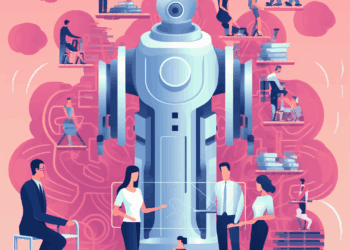

The digital marketing landscape is currently undergoing a radical metamorphosis that moves far beyond simple automation or basic chatbots. We are entering the era of the “Agentic Ecosystem,” a sophisticated network of autonomous AI entities that can reason, plan, and execute entire marketing funnels without constant human intervention.
In the past, marketers had to manually trigger every email campaign and social media post, essentially acting as the “brain” for every software tool in their stack. Today, the script has flipped as these new AI agents take on the role of strategic executors who can analyze real-time data and adjust tactics on the fly.
This shift is being driven by breakthroughs in large language models that have moved from merely predicting text to actually performing complex digital tasks across different platforms. Businesses that embrace this agent-centric model are seeing unprecedented levels of efficiency and personalization that were previously impossible to achieve at scale.
For the modern digital strategist, understanding how to build and manage these autonomous ecosystems is no longer an optional skill but a fundamental requirement for survival in a hyper-competitive market. This article will explore how these digital agents are taking over the heavy lifting of marketing, allowing humans to focus on the high-level creativity and empathy that machines cannot replicate.
The Rise of the Autonomous Marketer
The transition from “tools” to “agents” is the most significant change in marketing technology since the invention of the search engine.
Traditional software required a human to set up “if-this-then-that” rules, which often broke when the digital environment changed even slightly.
Agentic AI, however, uses a reasoning loop to understand the goal rather than just the instruction, allowing it to navigate obstacles independently.
Defining the Agentic Ecosystem

An agentic ecosystem is not just a single piece of software; it is a coordinated team of specialized AI agents working toward a common business objective. Think of it as a digital marketing agency where the account manager, the copywriter, the data analyst, and the media buyer are all high-functioning AI models.
These agents communicate with each other through secure APIs, sharing insights and data to ensure the entire marketing machine is perfectly synchronized.
A. The Researcher Agent: This entity constantly scans the web for trending topics, competitor moves, and shifts in consumer sentiment.
B. The Creative Agent: Based on the researcher’s data, this agent generates high-quality images, videos, and copy tailored to specific audience segments.
C. The Distribution Agent: This agent knows the optimal time and platform to post content to achieve maximum engagement and reach.
D. The Optimization Agent: By analyzing conversion rates and click-through data, this agent reallocates budget and tweaks creative assets in real-time.
Hyper-Personalization at Massive Scale
In the old days of digital marketing, “personalization” usually meant just putting a customer’s first name in the subject line of an email. With agentic ecosystems, every single user can have a unique journey that is created specifically for them as they interact with your brand.
The AI agents can track a user’s behavior across multiple touchpoints and instantly generate content that addresses their specific pain points or desires.
Automating Content Creation and Curation
Content is the fuel for the digital marketing engine, but creating enough of it to stay relevant is often an exhausting and expensive process for human teams. Agentic AI can take a single core idea and explode it into hundreds of different formats, from long-form blog posts to short-form vertical videos for social media.
Because the agents understand the nuance of each platform, they don’t just “re-post” content; they “re-imagine” it for the specific audience on that channel.
A. Transforming a technical white paper into a series of engaging LinkedIn carousels.
B. Generating script variations for TikTok videos that target different age demographics.
C. Creating localized versions of global campaigns that respect cultural nuances and language idioms.
D. Curating relevant industry news and adding original commentary to position your brand as a thought leader.
Real-Time Media Buying and Ad Management
The world of paid advertising moves so fast that human managers often find themselves making decisions based on data that is already hours or days old. Agentic ecosystems can monitor ad auctions and performance metrics every millisecond, making micro-adjustments to bids and targeting to ensure every dollar is spent wisely.
These agents can also perform “A/B testing” on thousands of variations simultaneously, finding the winning combination of headline and image much faster than a human could.
Enhancing Customer Experience with Intelligent Agents
Customer service is now a critical part of the digital marketing funnel, as a single bad interaction can ruin a brand’s reputation in minutes. Modern AI agents are no longer the frustrating “I don’t understand that” bots of the past; they are now capable of resolving complex issues with empathy and precision.
They can access a customer’s entire history and provide personalized solutions, such as suggesting a replacement product or offering a custom discount based on loyalty.
A. Providing 24/7 support in over 100 languages without the need for a massive call center.
B. Handling complex returns and exchanges through an autonomous, conversational interface.
C. Proactively reaching out to customers who show signs of “churning” with personalized re-engagement offers.
D. Guiding new users through a personalized onboarding process based on their specific goals and needs.
Data Privacy in the Age of Autonomous AI
As these agents collect and process massive amounts of consumer data, the importance of privacy and security has never been higher. New regulations in 2025 and 2026 are placing strict limits on how AI can use personal information, requiring a “Privacy-First” approach to agent design.
Agentic ecosystems can actually help with compliance by acting as a filter that anonymizes sensitive data before it is used for broader marketing analysis.
A. Implementing edge computing to process user data locally on their device whenever possible.
B. Automatically purging old or irrelevant data to minimize the risk of a breach.
C. Managing complex user consent forms and ensuring that marketing agents only act within the given permissions.
D. Providing transparent “Explainable AI” reports that show exactly why an agent made a specific marketing decision.
The Role of Human Oversight (The “Human in the Loop”)
Despite their autonomy, agentic ecosystems still require human leadership to set the ethical boundaries and the overall brand vision. The role of the marketer is shifting from “doer” to “orchestrator,” where they spend their time fine-tuning the goals and parameters of the AI agents.
Humans provide the creative “spark” and the strategic “why,” while the AI agents handle the mechanical “how” and the technical “what.”
Reducing Operational Costs and Increasing ROI
For many businesses, the cost of labor is the biggest hurdle to scaling their digital marketing efforts. By automating the repetitive and data-heavy tasks, agentic ecosystems allow companies to do more with fewer people, significantly boosting the return on investment.
This doesn’t mean firing everyone; it means allowing your human team to focus on high-value activities like brand strategy and customer relationship building.
A. Cutting the lead time for new campaign launches from weeks to just a few hours.
B. Reducing the overhead associated with managing multiple third-party agencies and vendors.
C. Lowering the cost-per-acquisition (CPA) through more precise targeting and better creative optimization.
D. Freeing up creative teams to work on “big picture” ideas that can truly disrupt the market.
Integrating Agentic AI into Your Current Stack
You don’t have to tear down your entire marketing infrastructure to start benefiting from agentic AI. Most modern marketing platforms are already starting to offer “agent-like” features that can be integrated into your existing workflows.
The key is to start small, perhaps with a single agent for email optimization or social media scheduling, and then expand as you see success.
A. Connecting your CRM to an agentic email platform to automate follow-up sequences.
B. Using AI-driven social listening tools to feed data directly into your content creation agents.
C. Implementing “Headless CMS” architectures that allow agents to push content to any device or platform easily.
D. Utilizing low-code/no-code tools to build custom agents for specific niche marketing tasks.
The Future of Search and Agentic Marketing
Search engines are evolving into “Answer Engines,” where AI agents summarize the web for the user rather than just giving them a list of links. This means that your digital marketing strategy must now focus on being the “primary source” that these search agents cite in their answers.
Agentic ecosystems can help you optimize your content for this new world of “Agentic SEO,” ensuring your brand remains visible in an AI-curated world.
Overcoming the Fear of AI Automation
It is natural for teams to feel threatened by the idea of autonomous agents taking over their work. Leadership must emphasize that these tools are “co-pilots” meant to amplify human potential, not replace the human soul of the brand.
Fostering a culture of “AI Literacy” is the best way to ensure that your team remains confident and capable as the technology evolves.
A. Providing hands-on training for employees to learn how to prompt and manage AI agents.
B. Creating an “AI Ethics Committee” to review the decisions made by the autonomous ecosystem.
C. Encouraging a “test and learn” mindset where failure is seen as a data point for future success.
D. Rewarding employees who find innovative ways to use AI to improve the customer experience.
Measuring the Success of Your AI Agents
Traditional metrics like “likes” and “shares” are becoming less important in an agent-driven world. You need to develop new Key Performance Indicators (KPIs) that measure the “Agentic Efficiency” of your marketing machine.
This includes metrics like “time-to-market,” “autonomous conversion rate,” and “customer sentiment improvement.”
A. Tracking the percentage of marketing workflows that are completed without human intervention.
B. Measuring the accuracy of AI-driven predictions regarding consumer behavior and market trends.
C. Analyzing the “cost-per-intelligent-action” compared to traditional manual marketing methods.
D. Evaluating the long-term lifetime value (LTV) of customers who were nurtured primarily by AI agents.
Conclusion

The digital world is moving toward a future where agents are the primary drivers of commerce. Your marketing strategy must adapt to this new reality if you want to remain relevant. Autonomous ecosystems are no longer a science fiction concept but a practical business tool.
The efficiency and speed they offer will soon become the standard for every industry. Focus on building a team of agents that reflect your brand’s unique voice and values. Embrace the technology as a way to free your human staff from the drudgery of data entry.
The most successful brands of the future will be those that master the art of AI orchestration. Don’t be afraid to experiment with new agentic tools as they hit the market in 2026. The rewards for early adopters are massive in terms of both profit and competitive advantage. Start your journey into the agentic era today and watch your digital presence transform.